You may have received the Thanksgiving forward below--or not...
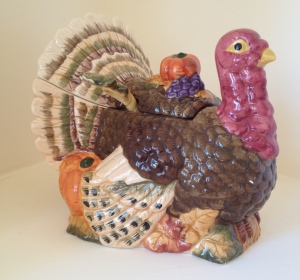 In any case, I share it. Supposedly it's from a grandmother. Disregarding its length and the possibility that a non-grandmother created it, it conveys an important message--irreverently highlighting elders' values--exaggerating basic, irksome things younger people, whether adult children or beloved grandchildren, do. Even if we don't get caught up in the specifics or the humor, the need for elders to have control and respect comes through loud and clear.
I've become even more keenly aware recently. For Senior Advisor R, now 101, life has become hard work. There may be no other 101-year-old in this country who still lives alone in her own home of 65+ years, getting regular help only 4 hours a week from a cleaning person. Admittedly neighbors on both sides and across the street discretely watch out for her 24/7. I've written about this previously. They treasure her.
To view entire blog and read Grandma's letter, please visit my other site.
This weekend is a family wedding. Grandfathers have passed away, but grandmothers on the groom’s side will be flying to Texas for the occasion. I haven’t met the bride or her family so I have no idea of the generations that will be represented on her side. One thing I do know, weddings are almost always intergenerational events, giving old and young the opportunity to interact easily, sharing a common, celebratory feeling during that brief period of time.
I’m reminded once again of Katy’s mother, who we met in the last post. But this time she had a diminishing experience, that even Katy couldn’t have predicted, when she attended a bridal shower for her granddaughter several years ago. Katy’s mother was 86 at the time, without wheel chair and a bit younger than she was in the last post. After the shower as they were driving home she reported to Katy (who sat no where near her mother at the shower) that a “young girl” (actually an adult in her early twenties) came over, introduced herself, sat down, and they had “a really nice conversation” until the end when the “girl” was getting ready to leave and said: “I really enjoyed talking with you, Gran.”
Katy’s mother was incensed at being called “Gran” (a name even her grandchildren didn’t use). No amount of explaining or rationalizing that this was probably the endearing term the “girl” used with her own grandmother, could erase the negative effect of a young woman’s well-intentioned conversation with the bride-to-be’s grandmother, who considered herself a capable, normal woman--not an old lady.
It’s hard to get into the head of older people, but older people have shared with me so that a wider audience can understand certain ways of thinking. For most, the importance of being respected and not considered "old" top of the list (along with independence, decent health and good friends).
A good friend's mother died last year at 104. A proud, strong woman with pride and standards, she became less easy to get along with and more set in her ways as she aged. She was fiercely loyal and I loved her. However, there was a fine line that no one should cross if they wanted a relationship with-- and/or cooperation from--her. That was the line that diminished dignity. She remained independent in her own apartment with part-time help, until she was 102 and her unsteadiness led to falls. So it was a choice: caregivers in her apartment or a care facility of some kind. While she chose caregivers, she balked at having them. They, of course, didn't dare call her honey or sweetie or dear, but then they couldn't call her "chief or boss" either (POST 1). So they addressed her by her formal name: they called her Mrs. Miller. That suited her just fine.Her trips to emergency increased with her age and age-related issues. Her son was at-the-ready, leaving instructions at nursing stations and the like saying "She wants to be called Mrs. Miller," after he informed appropriate people individually. If there was to be cooperation, Mrs Miller needed to be treated with--and know she had--respect.I think about the many alert, mentally capable elderly people whose lives are untentionally diminished by people who assume if you're old, you can't be treated like a normal functioning human being. It's not ill-spirited. Is it thoughtless or a response to a stereotyped idea of older people? We could say it's not politically correct. But most likely many would not listen because old people won't have a loud enough political lobbying voice to be heard on this subject until baby boomers age a bit more. Yet calling older people well-meaning, but diminishing, names is just one example. I think about Katy's mother who, in her late-80's, needed a wheel chair when there was a lot of walking involved. She was a smart and with-it woman, but Katy noticed that if they were going shopping, for example, the sales associate or clerk would address remarks to Katy, even though Katy's mother had initiated the conversation. This can happen in doctors' offices, at hospital registration sites, you name it. On the other hand, if we go shopping with our smart, with-it teenager (who's in a wheel chair for some not-observable reason) and he/she initiates a question, our teenager is answered. Check it out!If we are sensitive and find ourselves involved in an experience like Katy's with her mother, Katy's response, "You know, Mother asked the question," is a good model. In a nice, but straight-forward way, it redirects the conversation to her mother so that the sales person or whoever is aware of his/her unfounded assumption. (And even if he/she doesn't "get it" completely, our parent isn't excluded from the conversation.) We are so often on fast-forward that these diminishing experiences are easily ignored. But older parents, who usually have less going on in their lives and therefore may attach greater significance to things we hardly notice, say:"It chips away a little at a time." If your parent is not as strong as Mrs. Miller and empowering is a goal, these kinds of slights may be well worth recognizing.* * *If you have older parents and wish to share other examples for a future post, e-mail me (address at right sidebar).


